Turkish accession to the European Union would pose formidable problems for the CAP. These arise from the very large numbers of people employed on the land in Turkey, often engaged in very low value added forms of agriculture. 30 per cent of the population in Turkey is engaged in agriculture compared with only 5 per cent in the EU-25. If Turkey was to join the EU today it would more than double the agricultural population, adding 7.2 million people to the current 6.9 million.
Agriculture has an 11.5 per cent share of GDP in Turkey, compared with 1.9 per cent in the EU-15. Some 40 per cent of the population live in rural areas. Agricultural exports are 11.2 per cent of total exports compared with 3.9 per cent in the EU-15. Labour productivity in agriculture is low. Gross Value Added per person is agriculture is one-eighth of the average EU-15 level. Average income per employed household member in Turkish agriculture is less than 40 per cent of the level for non-agricultural workers.
Agriculture does, however, have a dual structure with commercial farms and export-oriented chains for individual products co-existing with subsistence or semi-subsistence farming. The average farm size is six hectares compared to the EU average of 13 hectares. In terms of value, fruit, vegetables and cereals are the most important farm products. Fruit and vegetable production alone accounts for 43 per cent of total output, compared with only 15 per cent in the EU. They also represent over half of Turkey’s agricultural exports. The livestock sector is much less competitive and badly in need of structural modernisation. The country already ranks as Europe’s largest fruit grower, behind Italy and Spain. Turkey occupies a strong position in relation to individual speciality crops. It is the second largest producer of hazelnuts in the world and is a competitive producer of peas, lentils and olive oil.
There are major animal health problems in Turkey. In the veterinary area, major efforts would have to be made to improve conditions and in particular controls on the eastern border. Some highly infectious animal diseases that have virtually disappeared in western and northern Europe remain endemic in Turkey. For example, outbreaks of foot and mouth disease have occurred in virtually every year since 1996. Turkey is also prone to outbreaks of anthrax and brucellosis. Food hygiene standards are poor.
Turkey lacks an adequate infrastructure of trained staff to implement the various rules and regulations that accompany CAP membership, although it is the case that farm policies are even more interventionist than those of the CAP. Yet levels of support are lower with a PSE in Turkey of 26 per cent compared with 37 per cent in the EU-15.
Rural development policy in Turkey is focused on large-scale investments in areas such as irrigation. Major dam projects are being undertaken in south-east Anatolia and should increase the farmland area benefiting from irrigation facilities by some twenty per cent. Structural policy would be a new concept for Turkey, however.
Agricultural policy has often been driven by vote seeking in rural areas and farmers’ organisations have been weakly developed. Nevertheless, the Agriculture Reform Implementation Project (ARIP) of 2001-5 represents a new direction in agricultural policy and aims to bring Turkey more in line with the EU. Price support has been reduced, subsidies have been removed and a direct income support for farmers similar to that now used in the EU has been introduced. This is not, however, fully decoupled as it is based on flat-rate payments per hectare, capped at 50 hectares. Most products, however, still enjoy high levels of trade protection, reflected in a considerable agricultural trade surplus. Attempts to reform the state-controlled Agricultural Sales Co-operatives have made little progress.
Calculations of the impact on the EU budget of Turkish membership vary according to the basis for the estimates made. Most estimates are based on the assumption of Turkish membership by 2015 which many analysts regard as unrealistically early. Assumptions also have to be made about the progress on further CAP reform by 2015.
The Commission’s own figure estimates the cost to the agriculture budget in 2015 at 2004 prices would be around €11.3bn, a larger sum than that taken up by the ten new entrants to the EU in 2004. Economists at Wageningen Univeristy have come up with a lower estimate of €5.2bn, made up of €3.6bn for market measures and direct aid and €1.6bn for rural development expenditure. However, this depends on a number of assumptions that include reform of the EU sugar regime, abolition of EU export refunds and a 20 per cent appreciation of the Turkish lira. There would also need to be 2 per cent annual decreases in EU income transfers from 2006 and further WTO tariff cuts after the completion of the Doha Round. Agra Europe estimates that the accession of Turkey and Croatia would add around €60 billion at the end of the next budgetary perspectives period or an estimated 19 per cent addition to an estimated 2013 expenditure level of €51.2bn for the EU-27, pushing the CAP spending total to around €60 bilion. In broad terms it seems realistic to expect an increase of over 20 per cent in the current CAP budget following Turkish membership.
Turkish membership would lock the EU into a long-term commitment to transferring resources to a largely backward agrarian economy. Indeed, in the short run, the shock of competition with the EU would exacerbate pre-existing problems of poverty.
Modernisation through skill transfer would be limited by the fact that 18 per cent of the agricultural workforce is illiterate. If employment in farming was to be reduced to a level nearer to its share of national output, a working paper by the Centre for European Reform estimates that it would be necessary to take eight million families out of agriculture.
There is a real danger that Turkish membership would embed a CAP dominated by redistributive policies that maintain inefficient forms of agricultural production. Admittedly, the prospect of Turkish membership could provide a new reform stimulus, but such pressures tend to have uneven effects.
Turkish accession is largely driven by 'big picture' political considerations, particularly for the UK, with the question of the CAP being left to negotiations with the hope that it will be all right on accession night. However, failure to arrive at a satisfactory deal would certainly delay entry and might halt it altogether given the lack of enthusiasm among many European states.Any source
Monday, October 10, 2005

Sunday, October 9, 2005
Sugar row could hit WTO talks
The decision by the EU to dump nearly two million tonnes of sugar on the world market (technically 'declassification' of quota sugar) despite a WTO ruling that such sales were illegal could have an impact on the Doha Round trade talks.
A statement by Brazil said (in rather convoluted syntax): 'It is unavoidable to note the negative signal the EC sends to WTO negotiators less than three months before the ministerial conference in Hong Kong by taking this decision on declassification. Hardly any of us could find a more deleterious way to express the gap between words and deeds.' The declassification is up to ten times as big as in previous years and the Brazilians claim that it could push the world price down by six per cent. The problem the Commission faces is that there are already nearly a million tonnes of surplus sugar stored across Europe at the Commission's expense.
The EU claims that since no deadline has yet been set to bring its sugar regime in compliance with the WTO ruling, it can get rid of its surplus in the meantime. An abitrator has been appointed to determine a reasonable length of time for the EU to comply and is due to report by late October. The delay between ruling and implementation means that complainats Brazil, Thailand and Australia are unlikely to be able to obtain legal redress against the EU for its decision to offload surplus sugar.
If the arbitrator does side with the complainants, this will be the first time that a major WTO member has failed to respect its commitments (in terms of export subsidies). Will the WTO be able to effectively discipline one of its most powerful members?
One lump or two? The state of the reform debate
There are signs of an emerging consensus. Member states that are hard hit such as Hungary, Ireland and Italy continue to complain about their fate, but really they are following the traditional EU tactic of getting some side payments in return for their agreement.
As Agra Europe recently commented, the Commission faces the unenviable task of negotiating 'the downsizing of a hugely bloated EU sugar market while somehow keeping on the right side of WTO law and avoiding causing too many bankruptcies among sugar producers and refiners in Europe and around the world ... Having created a monstrous regime which flew in the face of all principles of economic rationality, its creators knew all too well that the monster would bite back if anyone tried to interfere with it.'
The Commission suggested at a recent meeting of the Special Committee on Agriculture that new member states could receive a Separate Sugar Payment (SSP) as compensation for price cuts. The argument made for this payment is that farmers there have no track record of entitlements before accession in 2004. Latvia and Lithuania have been particularly concerned that the compensation for beet growers in the sugar proposal could go to landowners rather than the beet farmers.
Parliament's draft report unhelpful
The rapporteur on the sugar reform dossier in the European Parliament (Jean-Claude Fruteau) has come up with an unhelpful set of proposals in his draft report. They would both undermine the reform and penalise developing countries as well as hitting the EU budget.
The report suggests that the reduction in the reference price for sugar should be 25 per cent over three years not 39 per cent over two years as the Commission has proposed. It is difficult to see how such a scaled down reduction could permit the EU to meet its WTO commitments.
The report also suggests that the Commission should offer 80 per cent compensation for income losses incurred by EU sugar beet growers, a one third increase in the 60 per cent currently on the table. The idea that farmers in the new member states could receive their compensation on a per hectare basis is, however, compatible with the Commission's recent proposal discussed above and one wonders if a version of it might be used in the EU-15.
The report also proposes delaying the full implementation of the Everything But Arms agreement for six years until 2015. Imports of sugar from these developing countries could be controlled through a transitional period. Quotas would remain in place until 2015 but import duties would be gradually decreased. A so-called 'safeguard' clause would limit net exports by EBA countries to the difference between the sugar produced and the consumption level of each country.
The sugar lobby was earlier successful in delaying EBA implementation until 2009. Any further delay would be opposed by Global South groups like Oxfam.Any source
A statement by Brazil said (in rather convoluted syntax): 'It is unavoidable to note the negative signal the EC sends to WTO negotiators less than three months before the ministerial conference in Hong Kong by taking this decision on declassification. Hardly any of us could find a more deleterious way to express the gap between words and deeds.' The declassification is up to ten times as big as in previous years and the Brazilians claim that it could push the world price down by six per cent. The problem the Commission faces is that there are already nearly a million tonnes of surplus sugar stored across Europe at the Commission's expense.
The EU claims that since no deadline has yet been set to bring its sugar regime in compliance with the WTO ruling, it can get rid of its surplus in the meantime. An abitrator has been appointed to determine a reasonable length of time for the EU to comply and is due to report by late October. The delay between ruling and implementation means that complainats Brazil, Thailand and Australia are unlikely to be able to obtain legal redress against the EU for its decision to offload surplus sugar.
If the arbitrator does side with the complainants, this will be the first time that a major WTO member has failed to respect its commitments (in terms of export subsidies). Will the WTO be able to effectively discipline one of its most powerful members?
One lump or two? The state of the reform debate
There are signs of an emerging consensus. Member states that are hard hit such as Hungary, Ireland and Italy continue to complain about their fate, but really they are following the traditional EU tactic of getting some side payments in return for their agreement.
As Agra Europe recently commented, the Commission faces the unenviable task of negotiating 'the downsizing of a hugely bloated EU sugar market while somehow keeping on the right side of WTO law and avoiding causing too many bankruptcies among sugar producers and refiners in Europe and around the world ... Having created a monstrous regime which flew in the face of all principles of economic rationality, its creators knew all too well that the monster would bite back if anyone tried to interfere with it.'
The Commission suggested at a recent meeting of the Special Committee on Agriculture that new member states could receive a Separate Sugar Payment (SSP) as compensation for price cuts. The argument made for this payment is that farmers there have no track record of entitlements before accession in 2004. Latvia and Lithuania have been particularly concerned that the compensation for beet growers in the sugar proposal could go to landowners rather than the beet farmers.
Parliament's draft report unhelpful
The rapporteur on the sugar reform dossier in the European Parliament (Jean-Claude Fruteau) has come up with an unhelpful set of proposals in his draft report. They would both undermine the reform and penalise developing countries as well as hitting the EU budget.
The report suggests that the reduction in the reference price for sugar should be 25 per cent over three years not 39 per cent over two years as the Commission has proposed. It is difficult to see how such a scaled down reduction could permit the EU to meet its WTO commitments.
The report also suggests that the Commission should offer 80 per cent compensation for income losses incurred by EU sugar beet growers, a one third increase in the 60 per cent currently on the table. The idea that farmers in the new member states could receive their compensation on a per hectare basis is, however, compatible with the Commission's recent proposal discussed above and one wonders if a version of it might be used in the EU-15.
The report also proposes delaying the full implementation of the Everything But Arms agreement for six years until 2015. Imports of sugar from these developing countries could be controlled through a transitional period. Quotas would remain in place until 2015 but import duties would be gradually decreased. A so-called 'safeguard' clause would limit net exports by EBA countries to the difference between the sugar produced and the consumption level of each country.
The sugar lobby was earlier successful in delaying EBA implementation until 2009. Any further delay would be opposed by Global South groups like Oxfam.Any source
Thursday, October 6, 2005
Grain mountain fears grow
The grain sector is the EU commodity regime where reform is supposed to have been effective, bringing EU prices close to world levels. Why, then, are the amounts of grain in intervention stores growing? This trend reminds us of the susceptibility of the CAP to euro-dollar exchange rates and the potential for increasing output in the new member states of Eastern Europe.
Although some parts of the EU were badly hit by severe midsummer droughts, seen by some as both a symptom of and a contributor to global warming, this year's harvest is well above the average level for the past five years, even if it is 10 per cent down on last year's record. Internationally, harvests have been good and prices have suffered as a result.
Against the background of the Doha Round trade talks, and already under criticism for releasing sugar on to the world market, the EU is likely to be careful about subsidised exports. This means that the grain mountain will start to grow again. If the dollar appreciates, of course, some of the pressure could be eased as this would automatically move the world price of grain closer to the EU level, but this doesn't seem too likely. But there are longer term factors at work.
The Commission sets a lot of store by the reimposition of compulsory ten per cent set aside in 2004, but farmers simply farm the remaining area more intensively, often setting aside the least desirable land (as happens on the farm nearest to me).
However, the larger problem is the prospect of increases in yield in Eastern Europe as productivity improves. Severe weather conditions in the main sowing and growing periods hit production by around ten per cent in the new member states this year.
The scope for gains in productivity is shown by the fact that wheat yields in the Czech Republic, Hungary, Poland and Slovakia are currently around 3.8 tonnes/hectare, only just over half the EU-15 figure of 7.3 tonnes a hectare. In the worst case scenario, intervention stocks could be 20 million tonnes in 2010 rather than the 3 million tonnes anticipated by the Commission. Reform of the grain regime could come back on the agenda.Any source
Although some parts of the EU were badly hit by severe midsummer droughts, seen by some as both a symptom of and a contributor to global warming, this year's harvest is well above the average level for the past five years, even if it is 10 per cent down on last year's record. Internationally, harvests have been good and prices have suffered as a result.
Against the background of the Doha Round trade talks, and already under criticism for releasing sugar on to the world market, the EU is likely to be careful about subsidised exports. This means that the grain mountain will start to grow again. If the dollar appreciates, of course, some of the pressure could be eased as this would automatically move the world price of grain closer to the EU level, but this doesn't seem too likely. But there are longer term factors at work.
The Commission sets a lot of store by the reimposition of compulsory ten per cent set aside in 2004, but farmers simply farm the remaining area more intensively, often setting aside the least desirable land (as happens on the farm nearest to me).
However, the larger problem is the prospect of increases in yield in Eastern Europe as productivity improves. Severe weather conditions in the main sowing and growing periods hit production by around ten per cent in the new member states this year.
The scope for gains in productivity is shown by the fact that wheat yields in the Czech Republic, Hungary, Poland and Slovakia are currently around 3.8 tonnes/hectare, only just over half the EU-15 figure of 7.3 tonnes a hectare. In the worst case scenario, intervention stocks could be 20 million tonnes in 2010 rather than the 3 million tonnes anticipated by the Commission. Reform of the grain regime could come back on the agenda.Any source
Swiss to reform farm support
Switzerland is one of just five countries in the world with Producer Subsidy Equivalents calculated by the OECD at over the 60 per cent level. But now the Swiss Government has set out measures to make sharp cuts in support and liberalise markets. The government is planning to make significant expenditure cuts in a number of product sectors, abolish export subsidies, reduce tariffs on feed grain and switch from market support to direct aid payments, thus following the model of the EU.
The leader of the Swiss Farmers' Union, Jacques Bourgeois [sic] complained, 'Farms will face average income reductions of 20 per cent. This is totally unreasonable as farm incomes are already more than 40 per cent below those in other branches of industry.' However, the government is determined to promote the trend towards fewer, larger farms. One wonders about the future of those high alpine farms that so delight tourists to Switzerland.Any source
The leader of the Swiss Farmers' Union, Jacques Bourgeois [sic] complained, 'Farms will face average income reductions of 20 per cent. This is totally unreasonable as farm incomes are already more than 40 per cent below those in other branches of industry.' However, the government is determined to promote the trend towards fewer, larger farms. One wonders about the future of those high alpine farms that so delight tourists to Switzerland.Any source
Tuesday, October 4, 2005
Elizabeth Taylor Wins Lawsuit
Elizabeth Taylor’s Van Gogh painting “Vue de l’Asile et de la Chapelle de Saint Remy” was the subject of a recent suit by the heirs of a prior owner seeking to recover the painting. Margarete Mauthner’s heirs sued Taylor in federal court, 41 years after she purchased the painting from Sotheby’s in 1963. Mauthner owned the painting from 1914 until 1939, when she fled Nazi Germany. Her painting was seized by the Nazis and ended up in Sotheby’s Auction House in London in 1963, which sold it to Taylor.
The heirs claimed that Sotheby’s gave Taylor inconsistent and conflicting information about the history of the picture, which should have alerted Taylor that the validity of the painting’s ownership was in question. This issue was never decided, however, because the Judge dismissed both legal theories the heirs brought forth. The first theory was based on traditional state law based claims for conversion and restitution methods California state law for regaining possession. These claims were barred by the statute of limitations with regards to recovering stolen property, which starts when the purchaser, in this case Taylor, takes possession of the property. She bought the painting in 1963, and therefore the deadline in California to file suit was 1966.
The second theory the heirs relied on was based on the the federal Holocaust Victims Redress Act, the Nazi War Crimes Disclosure Act, and the “findings and declarations of the California legislature.” The Judge reasoned that none of these sources created a basis on which to sue. Courts are reluctant to create a new cause of action Congress has not explicitly created through legislative action. Here, the legislature intended the government to help victims recover their property under current laws.Any source
The heirs claimed that Sotheby’s gave Taylor inconsistent and conflicting information about the history of the picture, which should have alerted Taylor that the validity of the painting’s ownership was in question. This issue was never decided, however, because the Judge dismissed both legal theories the heirs brought forth. The first theory was based on traditional state law based claims for conversion and restitution methods California state law for regaining possession. These claims were barred by the statute of limitations with regards to recovering stolen property, which starts when the purchaser, in this case Taylor, takes possession of the property. She bought the painting in 1963, and therefore the deadline in California to file suit was 1966.
The second theory the heirs relied on was based on the the federal Holocaust Victims Redress Act, the Nazi War Crimes Disclosure Act, and the “findings and declarations of the California legislature.” The Judge reasoned that none of these sources created a basis on which to sue. Courts are reluctant to create a new cause of action Congress has not explicitly created through legislative action. Here, the legislature intended the government to help victims recover their property under current laws.Any source
Monday, October 3, 2005
Ahern draws return fire
Irish prime minister Bertie Ahern set out his stall in the defence of the CAP in the Financial Times last week but drew return fire from two of Europe's leading agricultural economists.
The Irish prime minister claimed that the CAP objectives set out in the Treaty of Rome were 'still valid today', although some think that circumstances in Europe are rather different today.
He then used the oft resorted to argument that we have to give the 'radical' 2003 reforms a chance to work. 'Farmers, like other business people, need a reasonable degree of stability in the policy environment in which they operate.' Well, they have had decades of handouts from European taxpayers and no one has seriously suggested a Kiwi style overnight abolition of the CAP.
He then goes on to argue that we shouldn't display our hand before the Doha Round talks in Hong Kong, which is reasonable enough. He then gets out the food security card, claiming that 'Europe's food supplies could, once again, become vulnerable.' He has the good sense not to mention terrorists, but even if extremists did manage to get to sea and blow up one or two ships carrying food, the impact would be negligible on overall supply.
We come to the crux of his real concerns when he starts to talk about damage to Europe's rural fabric and one hears echoes of de Valera's famous 1940s speech about Irish maidens dancing at crossroads etc. There is a serious point here, but what is needed is a vigorous and well designed rural development policy.
Ahern gets himself into trouble with his claims that there is 'a broad comparability of support' between the EU and the US. The OECD's Stefan Tangermann delivered a magisterial rebuke in a letter to the pink 'un, stating 'some numbers quoted are not exact.' (Put less politely, they are wrong). The former Gottingen professor points out that in the US in 2003 farm support stood at 15 per cent of receipts compared with 36 per cent in the EU.
Tangermann is constrained by the rules of an international organisation, but Reading University's Alan Swinbank was blunter. He notes that Ahern fails to point out that the decoupled subsidies are 'linked to lamd, enriching the land owner, and that they are based on area farmed, chiefly benefiting larger businesses rather than small, marginal farms'.
Swinbank points out that the October 2002 European Council meeting suggested 'that a ceiling would be set on CAP expenditure, not that a spending entitlement would be established.' The nub of his case is that the CAP 'is an imposition on the EU taxpayer crowding out other policy initiatives and creating winners and losers among member states. Mr Ahern overlooks the economic (and political) costs that a failed CAP imposes on the EU. Resources could be better deploted in other activities (providing genuine environmental benefits, and development in rural areas, for example).
The call for further reform will not go away. But the UK does not have sufficient political support to push it forward, despite Tony Blair's recent comment that his big regret about all the reforms he had undertaken was that they had not been radical enough.Any source
The Irish prime minister claimed that the CAP objectives set out in the Treaty of Rome were 'still valid today', although some think that circumstances in Europe are rather different today.
He then used the oft resorted to argument that we have to give the 'radical' 2003 reforms a chance to work. 'Farmers, like other business people, need a reasonable degree of stability in the policy environment in which they operate.' Well, they have had decades of handouts from European taxpayers and no one has seriously suggested a Kiwi style overnight abolition of the CAP.
He then goes on to argue that we shouldn't display our hand before the Doha Round talks in Hong Kong, which is reasonable enough. He then gets out the food security card, claiming that 'Europe's food supplies could, once again, become vulnerable.' He has the good sense not to mention terrorists, but even if extremists did manage to get to sea and blow up one or two ships carrying food, the impact would be negligible on overall supply.
We come to the crux of his real concerns when he starts to talk about damage to Europe's rural fabric and one hears echoes of de Valera's famous 1940s speech about Irish maidens dancing at crossroads etc. There is a serious point here, but what is needed is a vigorous and well designed rural development policy.
Ahern gets himself into trouble with his claims that there is 'a broad comparability of support' between the EU and the US. The OECD's Stefan Tangermann delivered a magisterial rebuke in a letter to the pink 'un, stating 'some numbers quoted are not exact.' (Put less politely, they are wrong). The former Gottingen professor points out that in the US in 2003 farm support stood at 15 per cent of receipts compared with 36 per cent in the EU.
Tangermann is constrained by the rules of an international organisation, but Reading University's Alan Swinbank was blunter. He notes that Ahern fails to point out that the decoupled subsidies are 'linked to lamd, enriching the land owner, and that they are based on area farmed, chiefly benefiting larger businesses rather than small, marginal farms'.
Swinbank points out that the October 2002 European Council meeting suggested 'that a ceiling would be set on CAP expenditure, not that a spending entitlement would be established.' The nub of his case is that the CAP 'is an imposition on the EU taxpayer crowding out other policy initiatives and creating winners and losers among member states. Mr Ahern overlooks the economic (and political) costs that a failed CAP imposes on the EU. Resources could be better deploted in other activities (providing genuine environmental benefits, and development in rural areas, for example).
The call for further reform will not go away. But the UK does not have sufficient political support to push it forward, despite Tony Blair's recent comment that his big regret about all the reforms he had undertaken was that they had not been radical enough.Any source
Sunday, October 2, 2005
Mary Coughlan, Ireland's farm minister
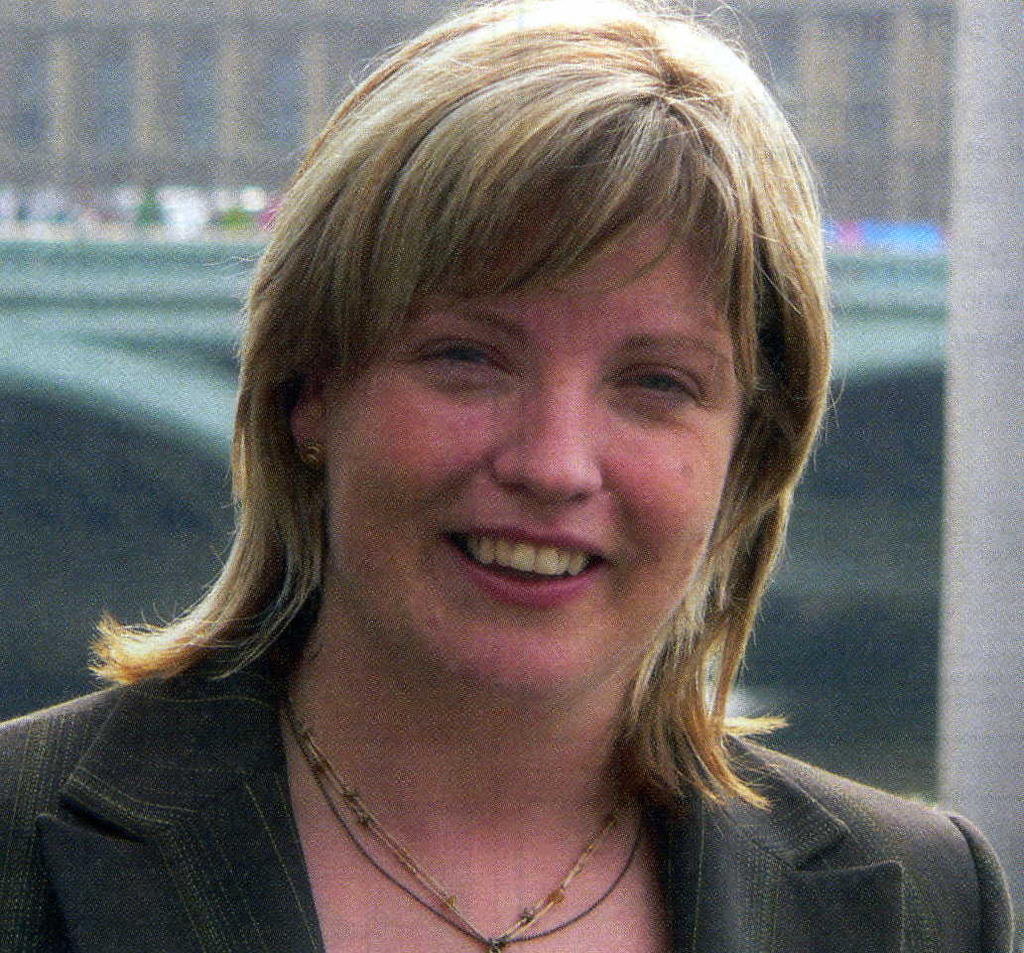
At a time when Irish prime minister Bertie Ahern has been defending the CAP in the Financial Times and getting it large from Professors Swinbank and Tangermann in return, it's a good time to take a look at Ireland's farm minister, Mary Coughlan.
There was a time when you had to have three qualifications to be a farm minister: you had to be a farmer, or at least an employee of a farmers' organisation or agricultural bureaucracy; you had to be a man; and you had to be overweight, to demonstrate that you had played your part in reducing the CAP surplus.
Mary Coughlan does, admittedly, come from a very rural constituency, Donegal South West. She was elected to the Dail for Fianna Fail shortly after graduating in politics and sociology from University College, Dublin in 1987. This rapid rise may have been helped by the fact that her father was a politician. Married with two young children, she became a minister of state in 2001. But the move from minister of social and family affairs to replace the long-serving Joe Walsh as farm minister in 2004 was something of a surprise.
She clearly represents modern, successful Ireland, with a reputation as having a sharp mind and an affable personality. Unfortunately she is a defender of traditional CAP policies. She wants the EU to be cautious in the Doha Round negotiations and she is disappointed by the UK's call for further reform of the CAP. 'I think it's unfair. A commitment was given in 2002 that funding would be fixed for 10 years. Tony Blair must keep his promise.'
Ireland has generally been a staunch ally of France on CAP reform and the matter is of such importance to the Republic that it is the prime minister who has to be wheeled out to explain why further reform is inappropriate.Any source
Subscribe to:
Posts (Atom)